As reported by the Wall Street Journal, Pfizer, the maker of one the best selling drugs ever, is trying to get the FDA to approve an Over the Counter (OTC) version of their blockbuster Lipitor, not coincidentally on the eve of Lipitor going generic.
Readers of this blog know that I am a big proponent of cholesterol lowering medications like Lipitor (statins) for patients at moderate to high risk of cardiovascular disease. In particular, I am a fan of the more potent statins like Lipitor and Crestor, because of their increased efficacy with fewer side effects (see Don't Take High Dose Simvastatin). Finally having a generic version available of Lipitor will be a great thing for many patients.
That said, making Lipitor OTC is a bad move. First, there is a difference between medications like Prilosec and Claritin that have gone over the counter and Lipitor. Diagnosis for GERD and allergic rhinitis for which those medications respectively treat are made mostly on symptoms alone. Patients don't need to go to medical school to suspect that they may suffer from heart burn or allergies. Starting treatment without seeing a physician is actually medically sound because more often then not the medications will relieve symptoms avoiding a physician office visit. In contrast, starting a patient on a statin is much more tricky. Patients need to know their individual risk for cardiovascular disease. Though there are tools available online to determine this (I use the NIH's risk calculator daily in my clinic), determining individual risk of disease, benefit of taking a medication and weighing this against potential side effects is best decided by a discussion between a doctor and patient. Secondly, before starting a statin medication, one needs to know their cholesterol levels. Though there are other methods (health fairs, work screenings) of determining cholesterol levels, getting a blood test usually requires a visit to the doctor's office. In addition, follow up blood work (checking for medication efficacy, liver side effects) is warranted after starting treatment. Thus, the benefit of having a medication OTC is negated. Finally, Claritin and Prilosec are very safe. They are as safe or safer then other OTC medications. Lipitor is also very safe, but is associated with rare, but serious side effects. Taking Lipitor OTC without consultation with a physician creates the risks of patients developing these side effects without proper warnings and therefore potentially worse outcomes if attention is not sought.
The second main reason that OTC Lipitor is a bad idea is that it will hurt more patients than it will help. The reason for this is that when a medication goes OTC, insurance companies usually will not pay for them. Now that Allegra is over the counter, it is virtually impossible for any of my patients to get a prescription version antihistamine. Though they can easily get this OTC, not having a prescription means they need to pay for it out of pocket. The cost of an OTC medication, even if the generic OTC version is used, is generally more than the co-pay for a generic prescription. It is unlikely that generic Lipitor will make the $4 Walmart or Target list, but after six month, the co-pay for generic Lipitor would still likely cost a lot less for most patients then paying for OTC Lipitor out-of-pocket.
Bottom Line: The reason why Pfizer wants Lipitor OTC is for one reason: to make more money. They can argue that cardiovascular disease is the number one killer in the US, and by having Lipitor OTC, it will be available to more patients. However, because statins require blood work and medical consultations, the risk of harm to patients outweighs the potential benefits of greater availability. In addition, this will result in cost-shifting to patients in order to boost Pfizer's profits. Hopefully, the FDA will say what they said when Merk tried to pull this off: "No."
Showing posts with label cholesterol. Show all posts
Showing posts with label cholesterol. Show all posts
Thursday, August 4, 2011


Wednesday, June 8, 2011
Don't Take High Dose Simvastatin!
Today the FDA just announced a new warning on the highest dose of simvastatin, the most popular cholesterol medication prescription in the country. They have issued this warning because "the highest approved dose--80 milligram (mg)--has been associated with an elevated risk of muscle injury or myopathy, particularly during the first 12 months of use."
The current recommendation is not to start simvastatin at 80mg and only to continue taking the 80mg if you "have been taking this dose for 12 months or more and have not experienced any muscle toxicity. It should not be prescribed to new patients.

In fact, simvastatin makes sense for many patients. Most data suggest that benefit is derived from statins when they reach about a 30% reduction in bad cholesterol, or LDL. The folks at the NIH's NHLBI have evaluated the efficacy of all the available statins (see below) and you can see that most statins will achieve that goal at various doses. For example 10mg of atorvastatin (Lipitor), 20-40mg of simvastatin, and 5mg of rosuvastatin (Crestor) all lower LDL cholesterol by about the same amount. Thus, if you just need a 30% reduction in LDL, you should be fine with the generic. Problem is that many patients need more than that amount of reduction. Thus, if you want to stick to a generic, you would have to go to 80mg of simvastatin.

Now one might thing that the stronger, more potent the statin, the more likely it is to cause side effects. Turns out the opposite is true. The graph below shows that when plotting LDL reduction against number of patients developing myopathy (what the FDA is concerned about), it seems like the more potent statins (Crestor, Lipitor) not only lower cholesterol better, but have a lower risk of myopathy. Myopathy is pretty uncommon, usually only about 1/10,000 or 0.01%. Looking at both Lipitor and Crestor, you can see as the dose goes up (10, 20, 40, 80) the percent of reduction of LDL continues to improve, but rate of myopathy is pretty much the same except for a slight bump at the 80mg dose of Lipitor. (Though not on the graph, you can see why the 80 mg dose of Crestor wasn't approved, because at that dose there was significant myopathy). However, when you jump from 40-80 mg of simvastatin, the LDL only goes up a few points, but the rate of myopathy skyrockets to over 1% (that's 1/100 instead of 1/10,000). Finally, you can why cerivastatin or Baycol was pulled from the market. It was pretty weak at lowering LDL, but had up to 2% incidence of myopathy at the higher doses.

The good news is that Lipitor will go generic in only a few months. When that happens, I am sure that the graph above will change drastically. All Lipitor scripts will likely go to the generic medication and probably many of the simvastatin prescriptions will also switch to generic atorvastin, since it is a better statin (more potent, fewer side effects). Crestor is another option (most effective, fewest side effects), but will not go generic for a while. The other thing to note is that Pfizer, who is about to lose Lipitor, is trying to get as much business as it can by offering patient coupons, so that (as long as you are not on Medicare part D or Medicaid) a prescription of Lipitor will only cost you $4 until it goes generic.
Bottom Line: All statins are not created equal and generic is not always best. If you are on Simvastatin 80mg, you should seriously discuss with your doctor about switching. In fact, if you are on simvastatin at any dose and not on Medicare part D or Medicaid, but have commercial insurance, you should consider asking your doctor about switching to Lipitor with the $4 coupon (you may actually save money by NOT taking the generic) until it too goes generic.
The current recommendation is not to start simvastatin at 80mg and only to continue taking the 80mg if you "have been taking this dose for 12 months or more and have not experienced any muscle toxicity. It should not be prescribed to new patients.
First, why is this announcement so important.
As Forbes' Matthew Herper points out in A Snapshot Of The Cholesterol Drug Market, though Lipitor is the biggest selling drug in terms of dollars, generic simvastatin is actually the most commonly prescribed cholesterol lowering medication. As you can see from the graph below (viewed much better on the Forbes site), once Zocor became available as generic simvastatin, it became the most popular statin written (blue line) whereas Lipitor (red line) prescriptions continue to tumble. Over time, insurance companies have made it more and more difficult to write for any branded statin by increasing co-pays for patients or increasing hurdles to get prescriptions approved.

In fact, simvastatin makes sense for many patients. Most data suggest that benefit is derived from statins when they reach about a 30% reduction in bad cholesterol, or LDL. The folks at the NIH's NHLBI have evaluated the efficacy of all the available statins (see below) and you can see that most statins will achieve that goal at various doses. For example 10mg of atorvastatin (Lipitor), 20-40mg of simvastatin, and 5mg of rosuvastatin (Crestor) all lower LDL cholesterol by about the same amount. Thus, if you just need a 30% reduction in LDL, you should be fine with the generic. Problem is that many patients need more than that amount of reduction. Thus, if you want to stick to a generic, you would have to go to 80mg of simvastatin.

Now one might thing that the stronger, more potent the statin, the more likely it is to cause side effects. Turns out the opposite is true. The graph below shows that when plotting LDL reduction against number of patients developing myopathy (what the FDA is concerned about), it seems like the more potent statins (Crestor, Lipitor) not only lower cholesterol better, but have a lower risk of myopathy. Myopathy is pretty uncommon, usually only about 1/10,000 or 0.01%. Looking at both Lipitor and Crestor, you can see as the dose goes up (10, 20, 40, 80) the percent of reduction of LDL continues to improve, but rate of myopathy is pretty much the same except for a slight bump at the 80mg dose of Lipitor. (Though not on the graph, you can see why the 80 mg dose of Crestor wasn't approved, because at that dose there was significant myopathy). However, when you jump from 40-80 mg of simvastatin, the LDL only goes up a few points, but the rate of myopathy skyrockets to over 1% (that's 1/100 instead of 1/10,000). Finally, you can why cerivastatin or Baycol was pulled from the market. It was pretty weak at lowering LDL, but had up to 2% incidence of myopathy at the higher doses.
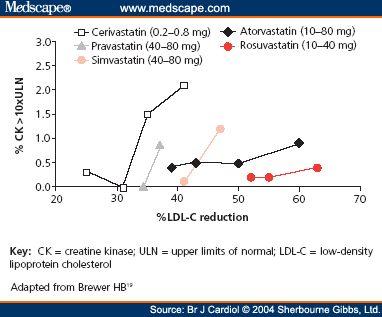
The good news is that Lipitor will go generic in only a few months. When that happens, I am sure that the graph above will change drastically. All Lipitor scripts will likely go to the generic medication and probably many of the simvastatin prescriptions will also switch to generic atorvastin, since it is a better statin (more potent, fewer side effects). Crestor is another option (most effective, fewest side effects), but will not go generic for a while. The other thing to note is that Pfizer, who is about to lose Lipitor, is trying to get as much business as it can by offering patient coupons, so that (as long as you are not on Medicare part D or Medicaid) a prescription of Lipitor will only cost you $4 until it goes generic.
Bottom Line: All statins are not created equal and generic is not always best. If you are on Simvastatin 80mg, you should seriously discuss with your doctor about switching. In fact, if you are on simvastatin at any dose and not on Medicare part D or Medicaid, but have commercial insurance, you should consider asking your doctor about switching to Lipitor with the $4 coupon (you may actually save money by NOT taking the generic) until it too goes generic.
Saturday, June 4, 2011
What to do about Niacin?
I have been getting a lot of questions regarding the use of Niacin since the media recently reported that the NIH had stopped their AIM-HIGH study. AIM-HIGH was designed to see if adding Niacin to patients on a statin who still had low HDL and high triglycerides would improve cardiovascular outcomes (heart attacks, strokes). Though we know that high triglycerides and low HDL are both strongly associated with heart disease, that Niacin will raise HDL and lower triglycerides and even few early studies did show raising the HDL with Niacin did work; this large, randomized NIH sponsored showed no evidence of improvement. Though the actual data from the study has not been released, we do know that the NIH stopped the study a year early because there was no benefit seen and possibly some harm in the form of excess stroke. One possibility is that patients were taking statins at doses that lowered their LDL to very aggressive levels (target range of 40-80). Some have postulated that with an LDL that low, you will never get a heart attack or stroke. So, Niacin may indeed work, but not with super reductions of LDL's with statins.
One of the main points of from these findings is that we have to be careful when it comes to using surrogate endpoints (like LDL and HDL) for treatment. For example, lowering the LDL with a statin reduces heart attacks and strokes. However, lowering the LDL with ezetimibe (Zetia) doesn't seem to do this (see here for more details) This might be the case for Niacin and HDL as well.
I have never been a big fan of Niacin because it causes pretty bad flushing, increases uric acid/gout, and most importantly raises blood glucose. Most of my patients are diabetic/prediabetic, so raising their blood sugar is not something I am too fond of. The other drugs that can raise HDL and lower triglycerides are fibrates. Gemfibrozil has clearly demonstrated this in a large VA study (VA-HIT). The problem with gemfibrozil is that it can interact with statins, causing some serious side effects. Statins are the one med that clearly works in just about everyone with increased cardiac risk. Fenofibrate works the same way, but can be used safely with a statin. However, when they tried to demonstrate cardiovascular improvements with fenofibrate (FIELD study), the primary outcome was not statistically significant. One of the differences between VA-HIT and FIELD is that more patients were on statins in FIELD, since FIELD was a more recent study and regular use of statins had become standard of care. However, in the diabetic patients with low HDL and high triglycerides, the FIELD study did show that fenofibrate reduced heart attacks and strokes. The ACCORD lipid study (another large, randomized, NIH sponsored trial), attempted to prove benefit by adding fenofibrate to all diabetics on a statin, but failed. However, similar to FIELD, in those diabetics with low HDL and high triglycerides, fenofibrate added to a statin did reduce heart attacks and strokes. The consistency of these findings therefore have some merit.
Bottom Line: Statins remain the first choice for patients at increased cardiovascular risk and should be used at doses that meet individual LDL goals and/or lower LDL by 30-40%. After that, the rationale for treating low HDL/high trigs is now less clear. Before we see the actual data from the AIM-HIGH study, it would be premature to pull all patients off of Niacin. That being said, in my opinion, Niacin's days are likely numbered. Evidence for raising HDL and lowering triglycerides seems to be much stronger for fenofibrate, at least in diabetics, and fenofibrate does not seem to have the negative effects, specifically hyperglycemia, seen with Niacin.
One of the main points of from these findings is that we have to be careful when it comes to using surrogate endpoints (like LDL and HDL) for treatment. For example, lowering the LDL with a statin reduces heart attacks and strokes. However, lowering the LDL with ezetimibe (Zetia) doesn't seem to do this (see here for more details) This might be the case for Niacin and HDL as well.
I have never been a big fan of Niacin because it causes pretty bad flushing, increases uric acid/gout, and most importantly raises blood glucose. Most of my patients are diabetic/prediabetic, so raising their blood sugar is not something I am too fond of. The other drugs that can raise HDL and lower triglycerides are fibrates. Gemfibrozil has clearly demonstrated this in a large VA study (VA-HIT). The problem with gemfibrozil is that it can interact with statins, causing some serious side effects. Statins are the one med that clearly works in just about everyone with increased cardiac risk. Fenofibrate works the same way, but can be used safely with a statin. However, when they tried to demonstrate cardiovascular improvements with fenofibrate (FIELD study), the primary outcome was not statistically significant. One of the differences between VA-HIT and FIELD is that more patients were on statins in FIELD, since FIELD was a more recent study and regular use of statins had become standard of care. However, in the diabetic patients with low HDL and high triglycerides, the FIELD study did show that fenofibrate reduced heart attacks and strokes. The ACCORD lipid study (another large, randomized, NIH sponsored trial), attempted to prove benefit by adding fenofibrate to all diabetics on a statin, but failed. However, similar to FIELD, in those diabetics with low HDL and high triglycerides, fenofibrate added to a statin did reduce heart attacks and strokes. The consistency of these findings therefore have some merit.
Bottom Line: Statins remain the first choice for patients at increased cardiovascular risk and should be used at doses that meet individual LDL goals and/or lower LDL by 30-40%. After that, the rationale for treating low HDL/high trigs is now less clear. Before we see the actual data from the AIM-HIGH study, it would be premature to pull all patients off of Niacin. That being said, in my opinion, Niacin's days are likely numbered. Evidence for raising HDL and lowering triglycerides seems to be much stronger for fenofibrate, at least in diabetics, and fenofibrate does not seem to have the negative effects, specifically hyperglycemia, seen with Niacin.
Saturday, June 19, 2010
Boston Doctors Getting Paid to Switch Patients to Generics
Interesting video from WCVB in Boston about doctors getting kick backs from the insurance company to switch patients from branded medications to generic medications. New Rules To Protect Prescription Drug Customers
If people were concerned about undue influence when drug companies used to give physicians pens and other novelties (now currently banned by most companies), they should really be concerned about actually monetary payments. The patient interviewed in the Boston piece stated his doctor wanted to switch him from Lipitor to generic simvastatin (cholesterol lowering medications) but did not mention that he was being payed by his insurance company to do so.
Though this is the first case I have heard of doctors being incentivized to switch patients to generics, it happens in pharmacies all the time. What is horrible is that some pharmacies may switch patients to alternative medications even if that switch costs the patient more money. The example I am familiar with is albuterol inhalers (see FDA Announces End for CFC-Propelled Inhalers).
Switching to generics is itself not a bad things. I have blogged before that, for most medicines, generics are just as good as brand name medicines. For example, if the patient were on Zocor, a switch to the generic simvastatin would probably make a lot of sense, since the medications are basically equivalent and it would likely save the patient some money. However, in some cases, the small differences may actually make a difference. Back in November, I discussed this in more detail (see Generic and Therapeutic Substitutions ).
In this particular case, the therapeutic switch from Lipitor to simvastatin might have been devastating since Lipitor is a much stronger medication. The piece does not say what dose the patient was on, but if the patient required Lipitor 40mg or 80mg, no dose of simvastatin would have given him the cholesterol lowering he needed.
What should you do?
1. If you are on a branded medication, ask your doctor if there is a generic equivalent of the exact same medicine, or one that works just as well.
2. If you are on a branded medicine and asked to switch to a generic by your doctor, find out why he or she wants to switch.
3. If you are on a branded medicine and asked to switch to a generic by your pharmacy, find out why they want you to switch. Is your insurance company asking for the switch? Is the medicine the same (generic substitution) or slightly different (therapeutic substitution)? Regardless, make sure that you check with your doctor before switching any medicine.
If people were concerned about undue influence when drug companies used to give physicians pens and other novelties (now currently banned by most companies), they should really be concerned about actually monetary payments. The patient interviewed in the Boston piece stated his doctor wanted to switch him from Lipitor to generic simvastatin (cholesterol lowering medications) but did not mention that he was being payed by his insurance company to do so.
Though this is the first case I have heard of doctors being incentivized to switch patients to generics, it happens in pharmacies all the time. What is horrible is that some pharmacies may switch patients to alternative medications even if that switch costs the patient more money. The example I am familiar with is albuterol inhalers (see FDA Announces End for CFC-Propelled Inhalers).
Switching to generics is itself not a bad things. I have blogged before that, for most medicines, generics are just as good as brand name medicines. For example, if the patient were on Zocor, a switch to the generic simvastatin would probably make a lot of sense, since the medications are basically equivalent and it would likely save the patient some money. However, in some cases, the small differences may actually make a difference. Back in November, I discussed this in more detail (see Generic and Therapeutic Substitutions ).
In this particular case, the therapeutic switch from Lipitor to simvastatin might have been devastating since Lipitor is a much stronger medication. The piece does not say what dose the patient was on, but if the patient required Lipitor 40mg or 80mg, no dose of simvastatin would have given him the cholesterol lowering he needed.
What should you do?
1. If you are on a branded medication, ask your doctor if there is a generic equivalent of the exact same medicine, or one that works just as well.
2. If you are on a branded medicine and asked to switch to a generic by your doctor, find out why he or she wants to switch.
3. If you are on a branded medicine and asked to switch to a generic by your pharmacy, find out why they want you to switch. Is your insurance company asking for the switch? Is the medicine the same (generic substitution) or slightly different (therapeutic substitution)? Regardless, make sure that you check with your doctor before switching any medicine.
Monday, May 3, 2010
Are Drug Reps and Free Samples Bad For Patients? It Depends
One of my favorite blogs, KevinMD, featured a post by Internist and fellow blogger Dr. Leslie Ramirez (founder of Leslie’s List, which helps the uninsured and underinsured find more affordable medications and health care services) on the true cost of free drug samples. Her point was that "free" drug samples may cost a patient in the long run if they are followed up with an expensive prescription that the patient can't afford. I posted a response on Kevin's site (more below) stating the issue was a little more complex, as Dr. Ramirez' example applied specifically to a patient who was paying out of pocket for medications, which is not usually the case. However, this post received numerous responses about the value/evils of both drug reps and the samples they provide. Below is an edited/expanded version of my replies.
The Benefit and Harm of Reps and Samples
Do drug reps/free samples…
-influence doctors? Absolutely.
-increase prescribing of non-generic meds? Absolutely.
-contribute to health care dollars spent on meds? Absolutely.
-harm or are bad for patients? It depends.
It is true that whenever a generic medication has equal safety and efficacy as a branded medication, the patient and public benefit when a generic is used. However, just because there are generic medications available, does not always mean that generics are the best choice for patients.
A good example is type 2 diabetes. The RECORD (see For the RECORD, Avandia does not cause heart attacks) study looked at cardiovascular safety of the much maligned drug Avandia. (RECORD showed it not to increase risk of CV death or hospitalization-something the media continues to ignore). The study took patients on a generic diabetes medication (either metformin or sulfonylurea) and randomized them to either an expensive, branded diabetes medicine (Avandia) or the other generic. Patients in the Avandia group who still had uncontrolled diabetes on Avandia + one generic could add the other generic. Patients in the other group who were uncontrolled on both generics had to go to insulin.
In addition to showing no difference in cardiovascular safety (primary endpoint), the patients in the Avandia group had better diabetes control, less weight gain, better cholesterol profiles, less hypoglycemia and less insulin use. In other words, though it certainly costs more money, (in this study) it was better to add Avandia then sticking with only generics. This should not be surprising since we know that the older diabetes drugs fail after a few years, and that TZD's like Avandia (seen now in ADOPT, RECORD, and BARI 2D) sustain glycemic control.
There are a few other examples where generic products exist, but branded products may be better. Branded statins (Crestor, Lipitor) are likely better then generics for patients with high cardiovascular risk who need to get their LDL (bad) cholesterol down more than 40%. In hypertension, losartan is the first generic angiotensin receptor blocker (ARB). Though there are several ACE inhibitors that are good once a day generics (lisinopril), up to 10% of patients will get a cough and need to be switched to an ARB. Now we finally have a generic ARB, except this one is not nearly as good as the other 4 branded products on the market. Because insurance companies will likely make it very difficult (higher co-pays and prior authorizations) to get one of the branded ARB's, patients will likely need to get a cough on an ACE and then fail losartan, before they are allowed to use the newer, better ARBs (and will still have a very high co-pay).
In addition, there are many medications that have no generics. All the respiratory medications (Advair, Symbicort, Spiriva, etc.) essentially have no generic equivalent. Having a drug rep provide samples of these meds will (as stated above) certainly increase prescriptions and therefore increase healthcare spending. However, asthma kills about 11 patients a day, COPD is the 4th leading cause of death, and both conditions are substantially under treated. Writing more prescriptions of these medications, and thus the reps that provide them, should therfore be a good thing. Even if the medicines are costly, their increased use will prevent exacerbations, hospitalizations, and even death (which have their own costs).
There is also the issue of direct cost to the patient (out of pocket costs) and the convenience factor. The FDA just approved a combination pill of Nexium and Naprosyn for rheumatoid arthritis. Many patients with rheumatoid arthritis need to take NSAIDs like naproxen on a regular basis. One of the side effects is stomach ulcers. Acid blocking proton pump inhibitors (PPI's) like Nexium can prevent these ulcers and guidelines recommend the use of PPI's with chronic NSAID therapy. The newly approved, branded pill will be an expensive, once a day pill that will treat the arthritis and protect the stomach. However, Prilosec (another PPI) and Naprosyn, are both over the counter. Why not just take two over the counter pills a day instead of an expensive branded pill? CVS brand naproxen would cost about 10 cents for two 22omg pills (prescription dose is 500mg), and one Prilosec 20mg OTC (not as strong as Nexium, but should do) is about 70 cents a day. Thus, a patient needing NSAIDs and stomach protection would need to take 3 pills at 80 cents/day, or $24/month. However, it is very likely that the drug company will provide coupons for patients that guarantee them that their co-pay is no more than $25/month. I would think that most patients would prefer the better, once a day pill than the 3 pills a day for about the same price. (There is also a potential safety benefit as combining the pills ensures the stomach is protected when taking an NSAID).
As already alluded to, the issue becomes further complicated when insurance coverage, samples and coupons create complex equations where decision making becomes a challenge. One example would be high cholesterol. Let’s say your bad cholesterol or LDL is 160 and your doctor tells you it needs to be under 100 based on your risk for heart attack and stroke. Simivastatin is generic and has been proven effective, but you will likely need the highest dose of 80mg to get to your goal (the higher the dose, the greater the likelihood of side effects). Generic simvastatin (no samples) costs you $10 month at your local CVS. There is also Lipitor, a branded drug that will get you to goal at a 20mg dose, but at a price of $25 per month. However, I can give you a four week sample of Lipitor to try (to make sure there are not side effects, etc.) and a coupon that will lower your monthly cost to $15. This will last for a year (at which point Lipitor should be generic). Using the branded product with samples and coupons, the additional out of pocket cost to the patient is only $50/year or an extra $4/month, but they get to try the med first, and received a drug that worked better, with fewer side effects. Which is better for the patient? (Before you say that $50/year is a lot for a poor person, keep in mind that very poor patients are on Medicaid and won't pay any difference for the medications, and people who do not have prescription coverage might have problems being able to afford either, as generic simvastatin 80mg is $33/month).
To be fair, there are PLENTY of examples where branded drugs are promoted heavily by the industry using drug reps and samples, where an equally safe and effective medications are available generically. Dr. Ramirez' post regarding generic citalopram and Lexapro is a great example. In addition, the argument can be made that drug companies should be putting their resources coming up with useful new agents, rather than re-packaging older medicines into one pill (like Naprosyn and Nexium).
The point is that the issue of the samples, drug reps and the industry is a complex one. The drug industry is one of the most profitable industries in the US. Their use of expensive, direct to consumer advertising may seem inappropriate to some, when so many in our country can not afford medications. Past excesses of lavish gifts to physicians (no longer allowed) and more recent settlements of off label promotions (see Pharma Should Not Settle Off-Label Promotional Suits) has certainly eroded trust in the industry from the public, patients and many physicians.
However, drugs save lives. Even in recent years, we have seen the remarkable difference prescriptions medications have made (HIV, cancer, heart attacks). Also, the majority of prescriptions being used today are now generic, and were made possible because they were once sold under a brand name. As stated above, generics are not always the best choice for patients, and while drug company promotional efforts will undoubtedly increase sales of expensive drugs, this is not necessarily a bad thing if patients' lives are improved. Finally, the way medications are covered and paid for create a sometime perverse set of circumstances where samples and coupons for expensive medicines may actually be in the patient's best interest even if similar medications are available generically or over the counter. Many (especially in the media) want to paint the influence of the pharmaceutical industry as black and white. However, this issue remains very, very grey.
The Benefit and Harm of Reps and Samples
Do drug reps/free samples…
-influence doctors? Absolutely.
-increase prescribing of non-generic meds? Absolutely.
-contribute to health care dollars spent on meds? Absolutely.
-harm or are bad for patients? It depends.
It is true that whenever a generic medication has equal safety and efficacy as a branded medication, the patient and public benefit when a generic is used. However, just because there are generic medications available, does not always mean that generics are the best choice for patients.
A good example is type 2 diabetes. The RECORD (see For the RECORD, Avandia does not cause heart attacks) study looked at cardiovascular safety of the much maligned drug Avandia. (RECORD showed it not to increase risk of CV death or hospitalization-something the media continues to ignore). The study took patients on a generic diabetes medication (either metformin or sulfonylurea) and randomized them to either an expensive, branded diabetes medicine (Avandia) or the other generic. Patients in the Avandia group who still had uncontrolled diabetes on Avandia + one generic could add the other generic. Patients in the other group who were uncontrolled on both generics had to go to insulin.
In addition to showing no difference in cardiovascular safety (primary endpoint), the patients in the Avandia group had better diabetes control, less weight gain, better cholesterol profiles, less hypoglycemia and less insulin use. In other words, though it certainly costs more money, (in this study) it was better to add Avandia then sticking with only generics. This should not be surprising since we know that the older diabetes drugs fail after a few years, and that TZD's like Avandia (seen now in ADOPT, RECORD, and BARI 2D) sustain glycemic control.
There are a few other examples where generic products exist, but branded products may be better. Branded statins (Crestor, Lipitor) are likely better then generics for patients with high cardiovascular risk who need to get their LDL (bad) cholesterol down more than 40%. In hypertension, losartan is the first generic angiotensin receptor blocker (ARB). Though there are several ACE inhibitors that are good once a day generics (lisinopril), up to 10% of patients will get a cough and need to be switched to an ARB. Now we finally have a generic ARB, except this one is not nearly as good as the other 4 branded products on the market. Because insurance companies will likely make it very difficult (higher co-pays and prior authorizations) to get one of the branded ARB's, patients will likely need to get a cough on an ACE and then fail losartan, before they are allowed to use the newer, better ARBs (and will still have a very high co-pay).
In addition, there are many medications that have no generics. All the respiratory medications (Advair, Symbicort, Spiriva, etc.) essentially have no generic equivalent. Having a drug rep provide samples of these meds will (as stated above) certainly increase prescriptions and therefore increase healthcare spending. However, asthma kills about 11 patients a day, COPD is the 4th leading cause of death, and both conditions are substantially under treated. Writing more prescriptions of these medications, and thus the reps that provide them, should therfore be a good thing. Even if the medicines are costly, their increased use will prevent exacerbations, hospitalizations, and even death (which have their own costs).
There is also the issue of direct cost to the patient (out of pocket costs) and the convenience factor. The FDA just approved a combination pill of Nexium and Naprosyn for rheumatoid arthritis. Many patients with rheumatoid arthritis need to take NSAIDs like naproxen on a regular basis. One of the side effects is stomach ulcers. Acid blocking proton pump inhibitors (PPI's) like Nexium can prevent these ulcers and guidelines recommend the use of PPI's with chronic NSAID therapy. The newly approved, branded pill will be an expensive, once a day pill that will treat the arthritis and protect the stomach. However, Prilosec (another PPI) and Naprosyn, are both over the counter. Why not just take two over the counter pills a day instead of an expensive branded pill? CVS brand naproxen would cost about 10 cents for two 22omg pills (prescription dose is 500mg), and one Prilosec 20mg OTC (not as strong as Nexium, but should do) is about 70 cents a day. Thus, a patient needing NSAIDs and stomach protection would need to take 3 pills at 80 cents/day, or $24/month. However, it is very likely that the drug company will provide coupons for patients that guarantee them that their co-pay is no more than $25/month. I would think that most patients would prefer the better, once a day pill than the 3 pills a day for about the same price. (There is also a potential safety benefit as combining the pills ensures the stomach is protected when taking an NSAID).
As already alluded to, the issue becomes further complicated when insurance coverage, samples and coupons create complex equations where decision making becomes a challenge. One example would be high cholesterol. Let’s say your bad cholesterol or LDL is 160 and your doctor tells you it needs to be under 100 based on your risk for heart attack and stroke. Simivastatin is generic and has been proven effective, but you will likely need the highest dose of 80mg to get to your goal (the higher the dose, the greater the likelihood of side effects). Generic simvastatin (no samples) costs you $10 month at your local CVS. There is also Lipitor, a branded drug that will get you to goal at a 20mg dose, but at a price of $25 per month. However, I can give you a four week sample of Lipitor to try (to make sure there are not side effects, etc.) and a coupon that will lower your monthly cost to $15. This will last for a year (at which point Lipitor should be generic). Using the branded product with samples and coupons, the additional out of pocket cost to the patient is only $50/year or an extra $4/month, but they get to try the med first, and received a drug that worked better, with fewer side effects. Which is better for the patient? (Before you say that $50/year is a lot for a poor person, keep in mind that very poor patients are on Medicaid and won't pay any difference for the medications, and people who do not have prescription coverage might have problems being able to afford either, as generic simvastatin 80mg is $33/month).
To be fair, there are PLENTY of examples where branded drugs are promoted heavily by the industry using drug reps and samples, where an equally safe and effective medications are available generically. Dr. Ramirez' post regarding generic citalopram and Lexapro is a great example. In addition, the argument can be made that drug companies should be putting their resources coming up with useful new agents, rather than re-packaging older medicines into one pill (like Naprosyn and Nexium).
The point is that the issue of the samples, drug reps and the industry is a complex one. The drug industry is one of the most profitable industries in the US. Their use of expensive, direct to consumer advertising may seem inappropriate to some, when so many in our country can not afford medications. Past excesses of lavish gifts to physicians (no longer allowed) and more recent settlements of off label promotions (see Pharma Should Not Settle Off-Label Promotional Suits) has certainly eroded trust in the industry from the public, patients and many physicians.
However, drugs save lives. Even in recent years, we have seen the remarkable difference prescriptions medications have made (HIV, cancer, heart attacks). Also, the majority of prescriptions being used today are now generic, and were made possible because they were once sold under a brand name. As stated above, generics are not always the best choice for patients, and while drug company promotional efforts will undoubtedly increase sales of expensive drugs, this is not necessarily a bad thing if patients' lives are improved. Finally, the way medications are covered and paid for create a sometime perverse set of circumstances where samples and coupons for expensive medicines may actually be in the patient's best interest even if similar medications are available generically or over the counter. Many (especially in the media) want to paint the influence of the pharmaceutical industry as black and white. However, this issue remains very, very grey.
Thursday, March 4, 2010
Should all patients with metabolic syndrome or elevated HgA1c take statins?
Metabolic syndrome is a constellation of factors (increased waist circumference, high blood pressure, elevated fasting glucose, high triglycerides, low hdl) that are associated with increased cardiovascular risk. Metabolic syndrome is often called pre-diabetes both because sugars are high and because metabolic syndrome is related to insulin resistance, the primary mechanism of type 2 diabetes. Diabetes has been generally defined as having a fasting blood sugar of greater than 126, so patients with sugars between 100-125 have also been called pre-diabetics. Like diabetes, we know that metabolic syndrome is associated with increased cardiovascular risk (increased risk for heart attack and stroke). Men with three or more components of metabolic syndrome have more than double the risk for cardiovascular disease, and women with three or more factors have almost six times the risk for cardiovascular disease.
Because diabetes is associated with such a high cardiovascular risk, and because lowering cholesterol with statins in diabetics has proven to reduce these events, current guidelines recommend that virtually all diabetics take a statin, even for those patients with normal cholesterol levels. One question which remains is whether the same should be done for patients with elevated fasting blood sugars and/or metabolic syndrome.
A recent study in the New England Journal called Glycated Hemoglobin, Diabetes, and Cardiovascular Risk in Nondiabetic Adults may give us more reason to consider thinking about using cholesterol lowering agents in patients with elevated blood sugars, even if the cholesterol is normal. The study looked at the relationship of hemoglobin A1c (HbA1c) to development of diabetes and cardiovascular risk. It was not surprising that even high end normal HbA1c's predicted development of diabetes, but what was surprising was that high normal HbA1c was strongly associated with risk for heart attack and stroke.
In the study, patients with an HbA1c of less than 5.0% had 4% relative decreased risk of cardiovascular disease compared to patients with and A1c of 5.0 to 5.5%. However, those with A1c's from 5.5 to 6.0% had a 23% increase, those with A1cs of 6.0 to 6.5% had a 78% increased risk, and those with 6.5% or greater had an almost double risk of cardiovascular disease. This suggest a strong correlation between elevated blood sugar (pre-diabetic patients) and cardiovascular risk.
In the most recent updates to the ADA guidlines published in the January 2010 edition of Diabetes Care, the ADA now defines diabetes as patients with an A1c of >6.5%, and those patients with A1c's between 5.7–6.4% have been included in a category of increased risk for future diabetes. Thus, the last group in the recent study would now be considered to already have diabetes.
This study also made me think of the JUPITER trial. The JUPITER trial is a controversial trial which I have blogged about before (see Jupiter is Out, and the News is Good! and Crestor: Get Ready to Ask Your Doctor for the CRP Test). It showed that patients with relatively normal cholesterol levels, but high levels of CRP benefited from taking 20mg of Crestor. Crestor now has an FDA indication for primary prevention of heart disease.
Interestingly in the JUPITER study, 41% of patients had the metabolic syndrome. The median A1c was 5.7 (interquartile range was 5.4-5.9). This means that about half the patients in the study had an extra 23% increase for cardiovascular disease based on A1c alone, and about 25% of patients had a 78% additional risk or higher (with the new ADA definition, there was probably not an insignificant number of patients in the JUPITER study that had an A1c above 6.5% that would now be considered to be diabetic and should have been on a statin). The reason I bring up JUPITER is because we now have a primary prevention trial in which a substantial number of patients had metabolic syndrome or elevated sugar, and this trial showed that statins were beneficial.
Thus, there are compelling arguments that can be made to suggest that patients with either metabolic syndrome or an elevated HgA1c should be on a statin (similar to diabetics) regardless of their cholesterol number.
However........
1. In order to definitively make this case, you would need a large, randomized clinical trial of patients with metabolic syndrome (or A1c's between 5.5 and 6.5) and normal cholesterol, randomized to statin or no statin. I am hopeful that the NIH or some drug company is planning on doing this.
2. In a subgroup analysis of the JUPITER trial, the investigators looked to see whether metabolic syndrome was a factor in those patients that benefited from Crestor and didn't find a statistically significant difference. It appears that CRP levels and not sugar levels is what made the difference.
3. Though the presence of metabolic syndrome does predict cardiovascular disease, it predicts diabetes much better, and the Framingham risk score is a much better predictor of cardiovascular disease (see Metabolic Syndrome vs Framingham Risk Score for Prediction of Coronary Heart Disease, Stroke, and Type 2 Diabetes Mellitus )
Bottom Line: Elevated HgA1c levels and metabolic syndrome substantially increase risk for cardiovascular disease, and there are compelling reasons to consider statin therapy in these patients, though conclusive data is lacking. As per the new ADA guidelines, patients at risk for diabetes should be screened with a HgA1c, and if it is greater than 6.5%, these patients are now considered diabetic and should receive a statin.
Since the Framingham risk calculation is still the best predictor for cardiovascular risk, a reasonable approach might be to adjust the Framingham score for patients with HgA1c's between 5.5% and 6.5%. Currently, patients with a Framingham risk of greater than 10% are considered for more aggressive LDL goals (which usually means they need a statin). Based on the numbers from the recent New England Journal study, for patients with A1c's from 5.5 to 6.0%, more aggressive goals should be considered when these patients have a Framingham score of 8% (instead of 10%), and for those with A1cs of 6.0 to 6.5%, more aggressive goals should be considered for a Framingham score above 6%.
Because diabetes is associated with such a high cardiovascular risk, and because lowering cholesterol with statins in diabetics has proven to reduce these events, current guidelines recommend that virtually all diabetics take a statin, even for those patients with normal cholesterol levels. One question which remains is whether the same should be done for patients with elevated fasting blood sugars and/or metabolic syndrome.
A recent study in the New England Journal called Glycated Hemoglobin, Diabetes, and Cardiovascular Risk in Nondiabetic Adults may give us more reason to consider thinking about using cholesterol lowering agents in patients with elevated blood sugars, even if the cholesterol is normal. The study looked at the relationship of hemoglobin A1c (HbA1c) to development of diabetes and cardiovascular risk. It was not surprising that even high end normal HbA1c's predicted development of diabetes, but what was surprising was that high normal HbA1c was strongly associated with risk for heart attack and stroke.
In the study, patients with an HbA1c of less than 5.0% had 4% relative decreased risk of cardiovascular disease compared to patients with and A1c of 5.0 to 5.5%. However, those with A1c's from 5.5 to 6.0% had a 23% increase, those with A1cs of 6.0 to 6.5% had a 78% increased risk, and those with 6.5% or greater had an almost double risk of cardiovascular disease. This suggest a strong correlation between elevated blood sugar (pre-diabetic patients) and cardiovascular risk.
In the most recent updates to the ADA guidlines published in the January 2010 edition of Diabetes Care, the ADA now defines diabetes as patients with an A1c of >6.5%, and those patients with A1c's between 5.7–6.4% have been included in a category of increased risk for future diabetes. Thus, the last group in the recent study would now be considered to already have diabetes.
This study also made me think of the JUPITER trial. The JUPITER trial is a controversial trial which I have blogged about before (see Jupiter is Out, and the News is Good! and Crestor: Get Ready to Ask Your Doctor for the CRP Test). It showed that patients with relatively normal cholesterol levels, but high levels of CRP benefited from taking 20mg of Crestor. Crestor now has an FDA indication for primary prevention of heart disease.
Interestingly in the JUPITER study, 41% of patients had the metabolic syndrome. The median A1c was 5.7 (interquartile range was 5.4-5.9). This means that about half the patients in the study had an extra 23% increase for cardiovascular disease based on A1c alone, and about 25% of patients had a 78% additional risk or higher (with the new ADA definition, there was probably not an insignificant number of patients in the JUPITER study that had an A1c above 6.5% that would now be considered to be diabetic and should have been on a statin). The reason I bring up JUPITER is because we now have a primary prevention trial in which a substantial number of patients had metabolic syndrome or elevated sugar, and this trial showed that statins were beneficial.
Thus, there are compelling arguments that can be made to suggest that patients with either metabolic syndrome or an elevated HgA1c should be on a statin (similar to diabetics) regardless of their cholesterol number.
However........
1. In order to definitively make this case, you would need a large, randomized clinical trial of patients with metabolic syndrome (or A1c's between 5.5 and 6.5) and normal cholesterol, randomized to statin or no statin. I am hopeful that the NIH or some drug company is planning on doing this.
2. In a subgroup analysis of the JUPITER trial, the investigators looked to see whether metabolic syndrome was a factor in those patients that benefited from Crestor and didn't find a statistically significant difference. It appears that CRP levels and not sugar levels is what made the difference.
3. Though the presence of metabolic syndrome does predict cardiovascular disease, it predicts diabetes much better, and the Framingham risk score is a much better predictor of cardiovascular disease (see Metabolic Syndrome vs Framingham Risk Score for Prediction of Coronary Heart Disease, Stroke, and Type 2 Diabetes Mellitus )
Bottom Line: Elevated HgA1c levels and metabolic syndrome substantially increase risk for cardiovascular disease, and there are compelling reasons to consider statin therapy in these patients, though conclusive data is lacking. As per the new ADA guidelines, patients at risk for diabetes should be screened with a HgA1c, and if it is greater than 6.5%, these patients are now considered diabetic and should receive a statin.
Since the Framingham risk calculation is still the best predictor for cardiovascular risk, a reasonable approach might be to adjust the Framingham score for patients with HgA1c's between 5.5% and 6.5%. Currently, patients with a Framingham risk of greater than 10% are considered for more aggressive LDL goals (which usually means they need a statin). Based on the numbers from the recent New England Journal study, for patients with A1c's from 5.5 to 6.0%, more aggressive goals should be considered when these patients have a Framingham score of 8% (instead of 10%), and for those with A1cs of 6.0 to 6.5%, more aggressive goals should be considered for a Framingham score above 6%.
Monday, February 15, 2010
Bad cholesterol not that bad? Shame on MSNBC...Again!
When it comes to politics, I do like MSNBC. They are also not bad in delivering the headlines. However, when it comes to health, especially on their web site, they have a long way to go. I am particularly dismayed at their re-purposing of material from other sources. This strategy, used by many other reputable web sites is not in and of itself horrible, but when it comes to health, I am not sure that their editors even read the articles they are posting as their own! This is especially true of material that the post from Men's Health. I mentioned this a while back in my post The truth on the 8 drugs doctors wouldn't take . This was a horrible article that was re-purposed on MSNBC about drugs that were supposedly so dangerous, doctors wouldn't take them. In fact, the authors of the article never asked one doctor when writing this article. I actually did (via Sermo), and found that 7 of the 8 drugs mentioned, most doctors had no problems prescribing.
Now Men's Health is back to their usual scare tactics in an article called "Bad cholesterol: It’s not what you think" which is now a featured article on MSNBC.
Factually, there is nothing wrong with the article. The major point of the article is that the concept of LDL cholesterol being "bad" is oversimplified. In fact, certain LDL particles may actually not be that harmful, whereas other types of LDL cholesterol can be killers. Fortunately, newer technology is becoming more readily available, which may help us customize treatment more accurately.
The problem that I have is the inflammatory language they use, calling the LDL "hypothesis"
"the greatest medical misadventure of our time" One of the paragraphs states that "the LDL hypothesis has also encouraged many of us to swallow the most-prescribed class of drugs in recent history. Americans spent more than $14 billion on LDL-lowering medications in 2008. Whether that money came out of their own pockets — straight up, or through ever-escalating co-pays — or out of the hemorrhaging U.S. health-insurance system known as Medicare, it's a huge expenditure. " In fact, the subtitle of the original article, which is not posted on MSNBC states, "before you swallow what your doctor prescribes, we suggest you read this article." They make it sound like doctors and the medical establishment have duped patients into taking unnecessary and expensive medicines.
With multiple drug advertisements on TV and blame being pointed at drug companies for our rising health care costs, it is not surprising that many people would find this "information" yet another reason not to take medications. The problem with this type of "journalism" is that it can actually harm people. In our media world of soundbytes, tweets and headlines; not everyone reads the entire story. In fact, many patients who need medicines get scared and stop taking them. My reason for posting the initial Men's Health article was because a patient whose horribly controlled asthma had been substantially improved with Advair was in my office sick again because she had stopped taking it. Her reason: her fiancee read the Men's Health article and told her her medicine was dangerous.
Medicine and health is complicated. There are some conditions where medication is overprescirbed (antibiotics for colds) and many chronic conditions like high blood pressure and diabetes which remain out of control and probably need even more medications. In addition, there are certainly a host of drugs proven not to be safe (Vioxx), including certain cholesterol medications (Baychol) which were pulled from the market. However, here is the truth about cholesterol lowering medications:
Now Men's Health is back to their usual scare tactics in an article called "Bad cholesterol: It’s not what you think" which is now a featured article on MSNBC.
Factually, there is nothing wrong with the article. The major point of the article is that the concept of LDL cholesterol being "bad" is oversimplified. In fact, certain LDL particles may actually not be that harmful, whereas other types of LDL cholesterol can be killers. Fortunately, newer technology is becoming more readily available, which may help us customize treatment more accurately.
The problem that I have is the inflammatory language they use, calling the LDL "hypothesis"
"the greatest medical misadventure of our time" One of the paragraphs states that "the LDL hypothesis has also encouraged many of us to swallow the most-prescribed class of drugs in recent history. Americans spent more than $14 billion on LDL-lowering medications in 2008. Whether that money came out of their own pockets — straight up, or through ever-escalating co-pays — or out of the hemorrhaging U.S. health-insurance system known as Medicare, it's a huge expenditure. " In fact, the subtitle of the original article, which is not posted on MSNBC states, "before you swallow what your doctor prescribes, we suggest you read this article." They make it sound like doctors and the medical establishment have duped patients into taking unnecessary and expensive medicines.
With multiple drug advertisements on TV and blame being pointed at drug companies for our rising health care costs, it is not surprising that many people would find this "information" yet another reason not to take medications. The problem with this type of "journalism" is that it can actually harm people. In our media world of soundbytes, tweets and headlines; not everyone reads the entire story. In fact, many patients who need medicines get scared and stop taking them. My reason for posting the initial Men's Health article was because a patient whose horribly controlled asthma had been substantially improved with Advair was in my office sick again because she had stopped taking it. Her reason: her fiancee read the Men's Health article and told her her medicine was dangerous.
Medicine and health is complicated. There are some conditions where medication is overprescirbed (antibiotics for colds) and many chronic conditions like high blood pressure and diabetes which remain out of control and probably need even more medications. In addition, there are certainly a host of drugs proven not to be safe (Vioxx), including certain cholesterol medications (Baychol) which were pulled from the market. However, here is the truth about cholesterol lowering medications:
- Currently available cholesterol lowering medications (statins) are the most commonly prescribed medications in the US
- Statins are extremely safe. The main side effect is muscle pains which happen in about 3% of patients, are usually mild, and usually go away.
- Serious side effects from statins do exist, but happen to fewer than one in a million patients, which is safer then most medications we have.
- Statins are likely responsible for the dramatic reductions seen in heart attack and stroke in the US.
- Cardiovascular disease (heart attack, stroke) is the single leading cause of death in the US. It beats cancer, diabetes, and accidents...combined!
- There are more studies on statins then any other medications
- The evidence that statins prevent heart attack and stroke in patients with risk factors is overwhelming.
- There is even talk of a polypill that contains multiple medications including a statin, that everyone over 50 would take to prevent heart attacks and strokes.
Bottom Line: We certainly need more tools and techniques to better identify those at risk and individualize treatment. However, currently LDL cholesterol is one of the best markers we have for cardiovascular disease (our country's leading killer) and we have safe and effective medications proven to lower this risk. Do not be afraid of statins.
Shame on MSNBC (again) for re-purposing inflammatory and potentially dangerous information.
Tuesday, February 9, 2010
Crestor approved for primary prevention
Today the FDA announced that Crestor (rosuvastatin) is now indicated for primary prevention of cardiovascular disease. I blogged about this a few weeks ago in my post Crestor: Get Ready to Ask Your Doctor for the CRP Test. Which reviewed the advisory board's recommendation to give Crestor this extra indication. Today the FDA made it official.
Specifically, Crestor is now indicated for
" the primary prevention of cardiovascular disease to reduce the risk of stroke, heart attack, and the risk of arterial revascularization procedures (including coronary artery bypass graft, or bypass grafting of a peripheral artery or carotid artery, or angioplasty or stent placement) in individuals who have no clinically evident heart disease but are at an increased risk of heart disease due to the combined effect of the following risk factors:
Specifically, Crestor is now indicated for
" the primary prevention of cardiovascular disease to reduce the risk of stroke, heart attack, and the risk of arterial revascularization procedures (including coronary artery bypass graft, or bypass grafting of a peripheral artery or carotid artery, or angioplasty or stent placement) in individuals who have no clinically evident heart disease but are at an increased risk of heart disease due to the combined effect of the following risk factors:
- Age (> 50 years in men; > 60 years in women), and
- An elevated high-sensitivity C-reactive protein level (> 2 mg/L), and
- Presence of at least one additional cardiovascular risk factor (e.g., high blood pressure, low HDL-C, smoking, or a family history of premature heart disease). "
There are several reasons why this is interesting:
1. It won't be long before Astra Zeneca, the makers of Crestor, advertise this new indication to patients on TV ads. They will likely ask patients to ask their doctor for CRP tests. Not everyone agrees with the use of the CRP test. The US Preventative Health Task Force (same folks that said mammograms under 50 may not be a good idea), also said that there was not enough evidence to test for and treat an elevated CRP. The Jupiter study led to Crestor getting this indication was a large, well done randomized trial and strong enough evidence for the FDA. However, some (like the US task force) don't think one study is enough.
2. Lipitor goes generic within a year. Lipitor is the number one selling drug in the country. A generic version of Lipitor could thus save millions. However, Lipitor does not have the indication for primary prevention of heart disease for patients with relatively normal cholesterol. I have previously blogged about what is meant by "an indication." Essentially, this means that the drug companies can only market to patients and doctors what the FDA says that they can do. Any other claims are considered "off-label" even if there is strong evidence that the medication does indeed work. My favorite example was back when Zyrtec (Pfizer) was a prescription drug and their marketing campaign focused on Zyrtec treating both indoor and outdoor allergies. The reality is that all allergens produce symptoms from histamines, and all antihistamines work the same way. However, none of Zyrtec's competitors (Allegra, Claritin) could make this claim since they did not have the indication. Thus, Pfizer made it sound like Zyrtec might be better than the others, when in fact, there wasn't really a difference.
However, Crestor's indication takes a more substantial meaning with generic Lipitor on the way. Lipitor has not been shown to do what Crestor did and probably never will, since Pfizer chose not to spend the money on this kind of study with Lipitor's patent fading. Unlike the Zyrtec/Allegra comparison, there may be a difference. Only the very potent, high dose statins have shown to substantially reduce CRP and potentially reverse cardiovascular disease. It is likely that Lipitor at an 80mg dose would do the same thing as Crestor 20mg, but could also have more side effects. Once Lipitor goes generic, the insurance companies are going to make it virtually impossible for patients to get Crestor. Yet, for primary prevention (as well as other more agressive lipid lowering goals), Crestor may be exactly what patients need.
3. The cholesterol guidelines that most physicians accept are the Adult Treatment Panel (ATP) III from the NIH's National Heart, Lung and Blood Institute. These guidelines are about a decade old. The most recent update was back in 2004 in response to several important studies. The next version should be up for public comment in just a few weeks, and done by the summer. The FDA's decision today should force the committee (though they would've probably done this anyway) to address the CRP question. It should be very interesting as well to see if they limit treating CRP with Crestor, or generalize this to other statins.
Tuesday, December 15, 2009
Crestor: Get Ready to Ask Your Doctor for the CRP Test.
The Wall Street Journal is reporting that and FDA panel voted 12-4 in favor of expanding its indication for treating elevated CRP levels. The FDA doesn't always follow the panel's advice, but it usually does, and probably will in this instance.
What's this about?
The FDA is reviewing the results of the JUPITER trial. I blogged about the results of the Jupiter trial a year ago. Basically this study looked at over 17,000 patients with relatively normal cholesterol levels, but an elevated CRP, which is a marker of inflammation and has been associated with elevated risk for heart attack and stroke. The study was planned for 4 years, but stopped just short of 2 years because they found a substantial benefit for patients taking Crestor. Crestor reduced the risk of heart related deaths, heart attacks, and other serious cardiac complications by 44%. These results are pretty impressive.
What's the FDA have to do with this?
Why is the FDA weighing in on a year old study for a drug that is already on the market? Because Astra Zeneca, the maker of Crestor, is asking the FDA to give Crestor and indication to use Crestor in patients with normal LDL's but elevated CRP's. Currently, all statin medications are only indicated to treat high cholesterol in order to prevent heart attacks and strokes, not to actually prevent heart attacks and strokes irrespective of cholesterol.
I have previously discussed the meaning of "indication" in a post called "An indication for change." Basically, even though Crestor has been proven to prevent heart attacks in patients with elevated CRP and normal cholesterol, the company can not share this information with doctors or advertise this information with patients until it gets the indication. You may notice that a recent Crestor commercial shows a woman over time who states that while she was building a family/career, atherosclerotic plaques were building up in her arterties. The reason this is a focus of the commercial is because Crestor recently got an indication to prevent the progression of atherosclerosis. Since it is the only statin with this indication, the company likely wants to use this as a competitive edge over other statins. It it gets the CRP indication, it will likely use this in advertising messages to doctors and patients.
What does this mean for me?
Actually, the study results have been out for over a year, so this is not really anything new. However, if the FDA does go forward with the panel's recommendations, you will likely hear more about testing for CRP, and your doctor may even recommend this test.
Should I use a statin to treat an elevated CRP?
The jury is still out. This may change though, as the Adult Treatment Panel IV (ATP4), a NIH sponsored group, will soon make its new cholesterol treatment recommendations. They will have to address the CRP issue. The US Preventative Health Task Force (the same government group that recently told younger women to stop getting mammograms) recently stated that they felt there was insufficient evidence to recommend this. This is true, because though there are numerous studies associating CRP to cardiovascular risk, only the JUPITER study shows that treatment works. That being said, the JUPITER study is a very large, randomized trial with substantial differences between treatment and placebo groups, so it should not be ignored. If you don't want to wait until the APT4 weighs in, I would discuss this with your physician. If you are very worried about heart attacks and strokes (possibly a strong family history), but have a normal cholesterol, treating an elevated CRP might be a reasonable option for you.
What do the nay-sayers say?
There are many that will come out against this, regardless of what the ATP4 decides. In addition to stating that there isn't enough data they will say:
The FDA will very likely approve Crestor for treating elevated CRP levels, and you will hear about this in the media and in advertisements. Though based on one study, the results are compelling enough to discuss this with your doctor and consider CRP testing.
What's this about?
The FDA is reviewing the results of the JUPITER trial. I blogged about the results of the Jupiter trial a year ago. Basically this study looked at over 17,000 patients with relatively normal cholesterol levels, but an elevated CRP, which is a marker of inflammation and has been associated with elevated risk for heart attack and stroke. The study was planned for 4 years, but stopped just short of 2 years because they found a substantial benefit for patients taking Crestor. Crestor reduced the risk of heart related deaths, heart attacks, and other serious cardiac complications by 44%. These results are pretty impressive.
What's the FDA have to do with this?
Why is the FDA weighing in on a year old study for a drug that is already on the market? Because Astra Zeneca, the maker of Crestor, is asking the FDA to give Crestor and indication to use Crestor in patients with normal LDL's but elevated CRP's. Currently, all statin medications are only indicated to treat high cholesterol in order to prevent heart attacks and strokes, not to actually prevent heart attacks and strokes irrespective of cholesterol.
I have previously discussed the meaning of "indication" in a post called "An indication for change." Basically, even though Crestor has been proven to prevent heart attacks in patients with elevated CRP and normal cholesterol, the company can not share this information with doctors or advertise this information with patients until it gets the indication. You may notice that a recent Crestor commercial shows a woman over time who states that while she was building a family/career, atherosclerotic plaques were building up in her arterties. The reason this is a focus of the commercial is because Crestor recently got an indication to prevent the progression of atherosclerosis. Since it is the only statin with this indication, the company likely wants to use this as a competitive edge over other statins. It it gets the CRP indication, it will likely use this in advertising messages to doctors and patients.
What does this mean for me?
Actually, the study results have been out for over a year, so this is not really anything new. However, if the FDA does go forward with the panel's recommendations, you will likely hear more about testing for CRP, and your doctor may even recommend this test.
Should I use a statin to treat an elevated CRP?
The jury is still out. This may change though, as the Adult Treatment Panel IV (ATP4), a NIH sponsored group, will soon make its new cholesterol treatment recommendations. They will have to address the CRP issue. The US Preventative Health Task Force (the same government group that recently told younger women to stop getting mammograms) recently stated that they felt there was insufficient evidence to recommend this. This is true, because though there are numerous studies associating CRP to cardiovascular risk, only the JUPITER study shows that treatment works. That being said, the JUPITER study is a very large, randomized trial with substantial differences between treatment and placebo groups, so it should not be ignored. If you don't want to wait until the APT4 weighs in, I would discuss this with your physician. If you are very worried about heart attacks and strokes (possibly a strong family history), but have a normal cholesterol, treating an elevated CRP might be a reasonable option for you.
What do the nay-sayers say?
There are many that will come out against this, regardless of what the ATP4 decides. In addition to stating that there isn't enough data they will say:
- "The patients in the JUPITER study taking Crestor developed diabetes". This is true, but most of the patients in the study were at risk of developing diabetes. Even though there were statistically a few more patients taking Crestor that developed diabetes, it is very unlikely that this was real, and other markers of diabetes were the same
- "You are taking medications that have side effects." It is true that any medication has side effects. However, one interesting thing that came out of the JUPITER study was that there were really no difference in side effects between the placebo group and Crestor group. Given that the 20mg dose used in the study was a relatively high dose, this is pretty impressive. Groups like Public Citizen warned of the dangers of Crestor, but this drug has proven to be quite safe.
- "The patients in JUPITER did not exactly have normal cholesterol levels, and their risk was high." This is a valid criticism. In order to really prove that treating elevated CRP levels with a statin prevents heart attacks, you would need to find patients with an otherwise low risk for heart disease (i.e. not pre-diabetic) and an ldl cholesterol below 100. However, the patients in JUPITER were very representative of the normal population of patients (60% of the country is overweight or obese and many a pre-diabetic) that would not usually get a statin medication.
Do I have to take Crestor to treat an elevated CRP?
This is actually a very important question. Currently, simivastatin is a generic cholesterol medicine and much cheaper then Crestor. Though simvastatin has not shown it can reduce heart attacks by lowering CRP, many physicians will assume a "class effect" and believe that all statins will do this. The problem is that a dose of 20mg of Crestor was used in the JUPITER study, and no amount of simvastatin will lower CRP or LDL by that much. In most studies that have measured CRP lowering with statins, it is the very potent statins that seem to work. In addition, though all statins have shown prevention of heart attacks and strokes, only the more potent statins (Lipitor and Crestor) at high doses have shown to prevent the progresssion and even shown reversal of plaque build up. This will become an even more important issue when Lipitor goes generic.
Bottom Line:The FDA will very likely approve Crestor for treating elevated CRP levels, and you will hear about this in the media and in advertisements. Though based on one study, the results are compelling enough to discuss this with your doctor and consider CRP testing.
Sunday, November 15, 2009
Stop Using Vytorin!!!!
At the American Heart Association meeting in Orlando, FL they just released the results of the ARBITER 6 HALTS study. No Vytorin was used in the study, but I am sure that all the headlines will mention Vytorin... and for good reason.
Here is the actual study published ahead of press online in the New England Journal of Medicine. Essentially, the enrolled over 200 patients from Walter Reed and Washington Adventist (right in my home town!) who had known heart disease or were at very high risk. These patient were already on a stable dose of a statin (40-50% on simvastatin -half of the Vytorin combination, and 40-50% on Lipitor) with LDL cholesterols (bad cholesterol) under 100 and HDL (good cholesterol) under 50 for men/55 for women. These patients were randomized to receive either Zetia (the other half of Vytorin) or Niacin (though you can get this vitamin over the counter, patients received the extended release prescription version, whose maker is also the sponsor of the study). They were looking to see whether or not there would be difference in progression of atherosclerosis (clogging of the arteries) over 14 months as measured by carotid intima-medial thickness (CIMT), and ultrasound of the neck arteries which seems to be a good measure of plaque buildup in the coronary or heart arteries. News broke earlier this year that the study was stopped early because there was a clear winner, but we didn't know which drug won until now.
Patients who got the Niacin had their good cholesterol raised by close to 20%. bad cholesterol lowered by close to 10%. The Zetia group lowered bad cholesterol by close to 20% but also lowered the good cholesterol too. More importantly, those patients taking the Niacin had a reduction in the plaque buildup, whereas patients taking the Zetia had no change in plaque build up. Surprisingly, and inexplicably, the more Zetia lowered your cholesterol, the more plaque build up patients had. Finally, and most importantly, only 1% of patients in the Niacin group had major cardiovascular events, compared to 4% in the Zetia groups. This was statistically significant.
This trial has broader implications than just the Vytorin issue (which I will get to in a second). It suggests that patients at high risk for cardiovascular disease may have additional benefit beyond lowering their bad cholesterol. Though the addition of Niacin was proven to show benefit, it might be possible that other drugs which raise HDL such as fish oil and fenofibrate (Trilipix) might benefit at risk patients as well.
I have posted extensively on Vytorin in the past. Most of the controversy had to do with the ENHANCE trial which I discussed in my post Vytorin and Zetia: What to do now? Briefly, whereas multiple statin trials have shown that lowering LDL with a statin led to decreased heart attacks and stroke, Vytorin only had data showing it lowered the LDL. Merk, the makers of Zocor (simvastatin), Zetia, and Vytorin (Zocor + Zetia) funded a trial that, similar to the HALT study, looked at CIMT to measure plaque buildup. It compared simvastatin to the same dose of simvastatin plus Zetia, or Vytorin. Though Vytorin lowered cholesterol more that the simvastatin alone, there was no difference in plaque buildup. Defenders of Vytorin said that ENHANCE was not an outcome study (designed to study actual heart attacks and strokes) and that there were no differences in outcomes between the two groups. Though the HALT study was also not designed as an outcome study, findings were consistent AND there was a difference in heart attacks and strokes: about triple the number in the Vytorin group. My initial recommendation was that though Vytorin was really useless, if patients couldn't reach their goal with a potent statin or couldn't tolerate the statin, then using or adding Zetia was reasonable. This is probably still the case. However, in the HALT study differences were seen in HDL (went up for Niacin and down for Zetia), and this may account for some of the difference. For patients whose HDL was low, I will probably be a little more cautious of using or adding Zetia, which may make their HDL go down in addition to their LDL.
Bottom Line: There is no good use for Vytorin, and it may even cause harm, not because of safety, but because the LDL goals achieved with Vytorin may lead to fewer heart attacks that could be prevented with a more potent statin. If you are on Vytorin, ask you doctor about considering a switch.
Here is the actual study published ahead of press online in the New England Journal of Medicine. Essentially, the enrolled over 200 patients from Walter Reed and Washington Adventist (right in my home town!) who had known heart disease or were at very high risk. These patient were already on a stable dose of a statin (40-50% on simvastatin -half of the Vytorin combination, and 40-50% on Lipitor) with LDL cholesterols (bad cholesterol) under 100 and HDL (good cholesterol) under 50 for men/55 for women. These patients were randomized to receive either Zetia (the other half of Vytorin) or Niacin (though you can get this vitamin over the counter, patients received the extended release prescription version, whose maker is also the sponsor of the study). They were looking to see whether or not there would be difference in progression of atherosclerosis (clogging of the arteries) over 14 months as measured by carotid intima-medial thickness (CIMT), and ultrasound of the neck arteries which seems to be a good measure of plaque buildup in the coronary or heart arteries. News broke earlier this year that the study was stopped early because there was a clear winner, but we didn't know which drug won until now.
Patients who got the Niacin had their good cholesterol raised by close to 20%. bad cholesterol lowered by close to 10%. The Zetia group lowered bad cholesterol by close to 20% but also lowered the good cholesterol too. More importantly, those patients taking the Niacin had a reduction in the plaque buildup, whereas patients taking the Zetia had no change in plaque build up. Surprisingly, and inexplicably, the more Zetia lowered your cholesterol, the more plaque build up patients had. Finally, and most importantly, only 1% of patients in the Niacin group had major cardiovascular events, compared to 4% in the Zetia groups. This was statistically significant.
This trial has broader implications than just the Vytorin issue (which I will get to in a second). It suggests that patients at high risk for cardiovascular disease may have additional benefit beyond lowering their bad cholesterol. Though the addition of Niacin was proven to show benefit, it might be possible that other drugs which raise HDL such as fish oil and fenofibrate (Trilipix) might benefit at risk patients as well.
I have posted extensively on Vytorin in the past. Most of the controversy had to do with the ENHANCE trial which I discussed in my post Vytorin and Zetia: What to do now? Briefly, whereas multiple statin trials have shown that lowering LDL with a statin led to decreased heart attacks and stroke, Vytorin only had data showing it lowered the LDL. Merk, the makers of Zocor (simvastatin), Zetia, and Vytorin (Zocor + Zetia) funded a trial that, similar to the HALT study, looked at CIMT to measure plaque buildup. It compared simvastatin to the same dose of simvastatin plus Zetia, or Vytorin. Though Vytorin lowered cholesterol more that the simvastatin alone, there was no difference in plaque buildup. Defenders of Vytorin said that ENHANCE was not an outcome study (designed to study actual heart attacks and strokes) and that there were no differences in outcomes between the two groups. Though the HALT study was also not designed as an outcome study, findings were consistent AND there was a difference in heart attacks and strokes: about triple the number in the Vytorin group. My initial recommendation was that though Vytorin was really useless, if patients couldn't reach their goal with a potent statin or couldn't tolerate the statin, then using or adding Zetia was reasonable. This is probably still the case. However, in the HALT study differences were seen in HDL (went up for Niacin and down for Zetia), and this may account for some of the difference. For patients whose HDL was low, I will probably be a little more cautious of using or adding Zetia, which may make their HDL go down in addition to their LDL.
Bottom Line: There is no good use for Vytorin, and it may even cause harm, not because of safety, but because the LDL goals achieved with Vytorin may lead to fewer heart attacks that could be prevented with a more potent statin. If you are on Vytorin, ask you doctor about considering a switch.
Wednesday, May 13, 2009
4 Things the FDA Should Go After Besides Cheerios
As reported by the Wall Street Journal, the FDA has decided to go after the maker s of Cheerios. You can read their warning letter to General Mills here. The issue the FDA has is not that Cheerios doesn't really lower your cholesterol, but that the language on the box, specifically that eating Cheerios can "lower your cholesterol 4% in six weeks" means that Cheerios is intended for the use of lowering cholesterol, and is therefor a drug. Former FDA chair Dr. David Kessler's book "A Question of Intent" covers this topic nicely. He describes his struggle to try and regulate big tobacco. Since tobacco grows naturally, the argument was that it could not have been intended for a specific use. However, Kessler's fight was to show that the companies manipulated natural tobacco and the way it was delivered to cause an intended response, i.e satisfaction and addiction.
There are other foods that can make health claims, and the FDA's letter to Cheerios points out that soluble fiber products can talk about health benefits, as long as they add an "as part of" clause to the packaging. Though Cheerios has this, they feel the more prominent claim on the box (though not stated in the letter, it's basically their entire marketing campaign) is much stronger.
Since Cheerios does have clinical data to support a 4% reduction in total cholesterol, I am less worried about the stating this, but more concerned about patient's perception about what that does to cardiovascular risk. I have so many patients that are at risk for heart disease, warrant lipid lowering medications by any guideline, and yet are so affraid of medications ask if we give something like Cheerios a try first. The problem is that even though Cheerios may lower your cholesterol by 4%, this probably has no impact on your risk for heart attack or stroke. If you look at all of the cholesterol studies (any drug in any population) it is clear that to derive benefit you need at least around a 25% reduction in bad cholesterol to get any gain. Thus, my problem with Cheerios is not their claim to lower cholesterol, but the implication that this will make a bit of difference when it comes to heart attack or stroke.
However, there are several things that the FDA could focus on that, in my opinion, would serve a much greater purpose.
1. Medications approved not as drugs, but devices, so they seem like they work.
My favorite pharmacist blogger Mr. Medsaver recently gave a great example of this in his post regarding Allergen which is marketed under the names Chloraseptic Allergen Block and Little Allergies. These products are approved by the FDA, not as drugs but as devices. There is actually no active medical ingredients. These products are essentially petroleum jelly that you put under your nose. Their is absolutely no data whatsovere to suggest that these products do anything at all. Yet, patients wanting to help themselves or children who suffer from allergies and are affraid of side effects from actual medication will likely spend millions of dollars this year on a product which has never been shown to be effective, and is likely not. The FDA needs to work on this loop hole.
2. Supplements that imply health claims
To me this is a much greater problem. At CVS.com you can get Ez Diet Carb Suppressor Capsules which have no real ingredients that have been shown to actually lose weight. The name implies they work, but a claim is not being officially made. At GNC.com, a reputable supplement company, their Mega Men 50 supplement is a "healthy aging program for men over 50" and should be taken to "support prostate health" "support eye health" and "provides antioxidant protection." The FDA does not consider these claims as serious apparently as Cheerios, because they are stating that they support eye health for example, and not improving your vision. However, I betting that more people spend their dollars on supplements then Cheerios for health improvement. In addition, unlike Cheerios which at least provides breakfast, the evidence for vitamins and supplements are poor. I discuss this more in my previous post Which Vitamin Should I Take?
3. Homeopathic agents that imply anything
Airborne, Head On, etc. Enough said. At least vitamins and supplements have some potential value. These products have no potential benefit, clearly are making claims, and do absolutely nothing. Innocent patients are wasting millions of dollars on these products.
4. e-cigarettes
These products are drugs without question. They ought to be regulated by the FDA and they have not been proven safe in humans. Though the FDA may not be able to do much about products sold over the Internet, e-cigarettes, which are nictoine inhalers marketed as safer alternatives to cigarettes and smoking cessation aids, are being sold in U.S. shopping malls. There sale in the U.S. should be abruptly halted. See more on my previous post.
s of Cheerios. You can read their warning letter to General Mills here. The issue the FDA has is not that Cheerios doesn't really lower your cholesterol, but that the language on the box, specifically that eating Cheerios can "lower your cholesterol 4% in six weeks" means that Cheerios is intended for the use of lowering cholesterol, and is therefor a drug. Former FDA chair Dr. David Kessler's book "A Question of Intent" covers this topic nicely. He describes his struggle to try and regulate big tobacco. Since tobacco grows naturally, the argument was that it could not have been intended for a specific use. However, Kessler's fight was to show that the companies manipulated natural tobacco and the way it was delivered to cause an intended response, i.e satisfaction and addiction.There are other foods that can make health claims, and the FDA's letter to Cheerios points out that soluble fiber products can talk about health benefits, as long as they add an "as part of" clause to the packaging. Though Cheerios has this, they feel the more prominent claim on the box (though not stated in the letter, it's basically their entire marketing campaign) is much stronger.
Since Cheerios does have clinical data to support a 4% reduction in total cholesterol, I am less worried about the stating this, but more concerned about patient's perception about what that does to cardiovascular risk. I have so many patients that are at risk for heart disease, warrant lipid lowering medications by any guideline, and yet are so affraid of medications ask if we give something like Cheerios a try first. The problem is that even though Cheerios may lower your cholesterol by 4%, this probably has no impact on your risk for heart attack or stroke. If you look at all of the cholesterol studies (any drug in any population) it is clear that to derive benefit you need at least around a 25% reduction in bad cholesterol to get any gain. Thus, my problem with Cheerios is not their claim to lower cholesterol, but the implication that this will make a bit of difference when it comes to heart attack or stroke.
However, there are several things that the FDA could focus on that, in my opinion, would serve a much greater purpose.
1. Medications approved not as drugs, but devices, so they seem like they work.
My favorite pharmacist blogger Mr. Medsaver recently gave a great example of this in his post regarding Allergen which is marketed under the names Chloraseptic Allergen Block and Little Allergies. These products are approved by the FDA, not as drugs but as devices. There is actually no active medical ingredients. These products are essentially petroleum jelly that you put under your nose. Their is absolutely no data whatsovere to suggest that these products do anything at all. Yet, patients wanting to help themselves or children who suffer from allergies and are affraid of side effects from actual medication will likely spend millions of dollars this year on a product which has never been shown to be effective, and is likely not. The FDA needs to work on this loop hole.
2. Supplements that imply health claims
To me this is a much greater problem. At CVS.com you can get Ez Diet Carb Suppressor Capsules which have no real ingredients that have been shown to actually lose weight. The name implies they work, but a claim is not being officially made. At GNC.com, a reputable supplement company, their Mega Men 50 supplement is a "healthy aging program for men over 50" and should be taken to "support prostate health" "support eye health" and "provides antioxidant protection." The FDA does not consider these claims as serious apparently as Cheerios, because they are stating that they support eye health for example, and not improving your vision. However, I betting that more people spend their dollars on supplements then Cheerios for health improvement. In addition, unlike Cheerios which at least provides breakfast, the evidence for vitamins and supplements are poor. I discuss this more in my previous post Which Vitamin Should I Take?
3. Homeopathic agents that imply anything
Airborne, Head On, etc. Enough said. At least vitamins and supplements have some potential value. These products have no potential benefit, clearly are making claims, and do absolutely nothing. Innocent patients are wasting millions of dollars on these products.
4. e-cigarettes
These products are drugs without question. They ought to be regulated by the FDA and they have not been proven safe in humans. Though the FDA may not be able to do much about products sold over the Internet, e-cigarettes, which are nictoine inhalers marketed as safer alternatives to cigarettes and smoking cessation aids, are being sold in U.S. shopping malls. There sale in the U.S. should be abruptly halted. See more on my previous post.
Subscribe to:
Posts (Atom)


